Spend is accumulating while the return and attention signals stay weak.
AI systems
I built the dashboard I needed to decide what to make next.
Built from scratch with AI, the system connects Meta reporting to creative planning: what is working, why it may be working, and what the team should make next.
Meta creative intelligence
Hundreds of ads become one readable creative history.
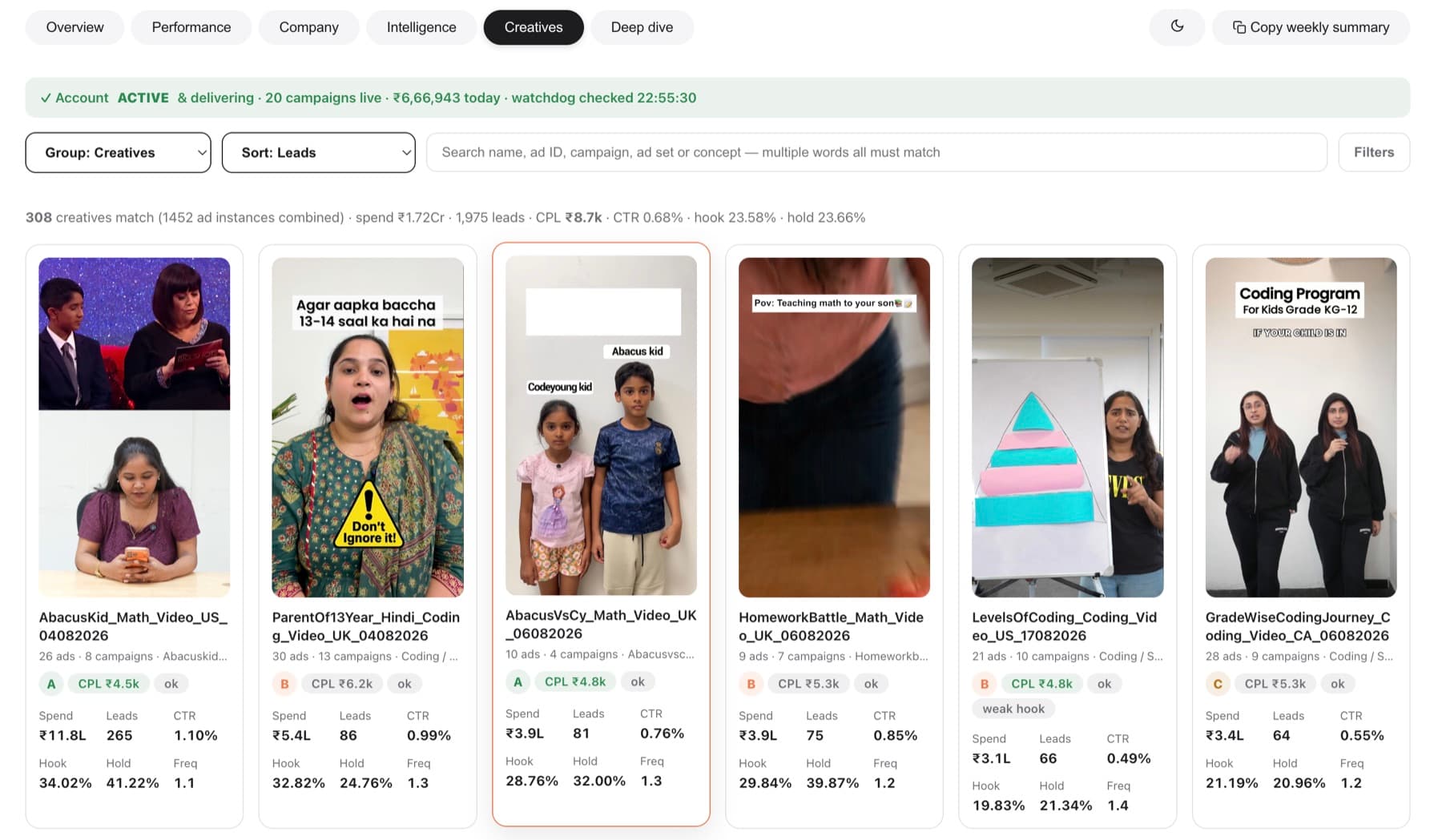
Ad names change, campaigns duplicate, and the same concept gets launched in multiple versions. I built a view that groups those instances back into the creative idea, so the pattern does not disappear inside Ads Manager.
- 308
- creative concepts in the captured view
- 1,452
- ad instances brought into one system
- 2
- languages read alongside hook and format
01
Read each concept, not just each ad row.
Spend, leads, CPL, CTR, hook rate, and hold rate sit beside the concept, format, category, and language. That makes a creative review possible without rebuilding the report every week.
02
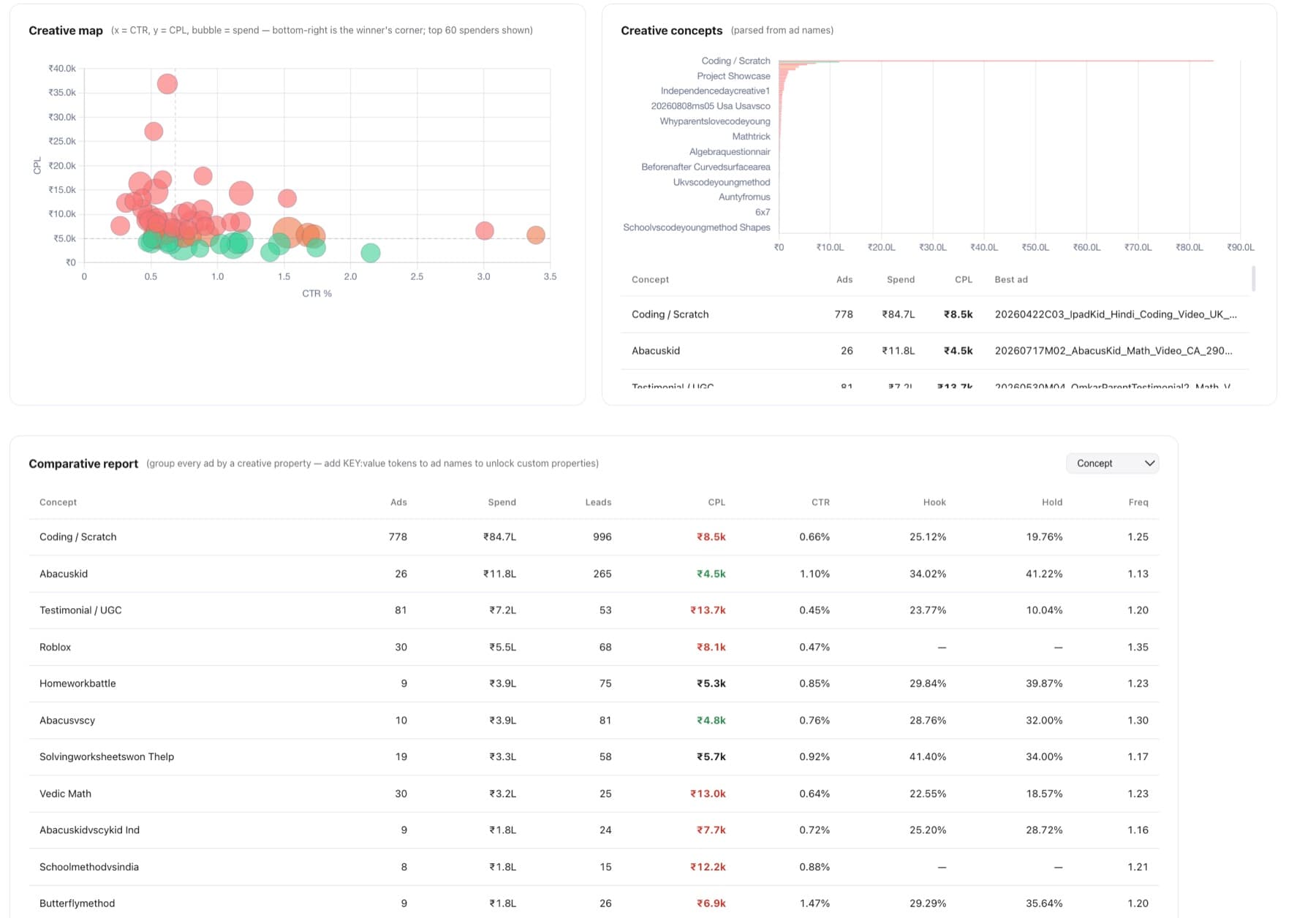
Compare concepts, categories, and formats.
The creative map keeps every idea visible without forcing it into one leaderboard. It helps reveal crowded formats, under-tested angles, and language gaps worth briefing.
The action layer
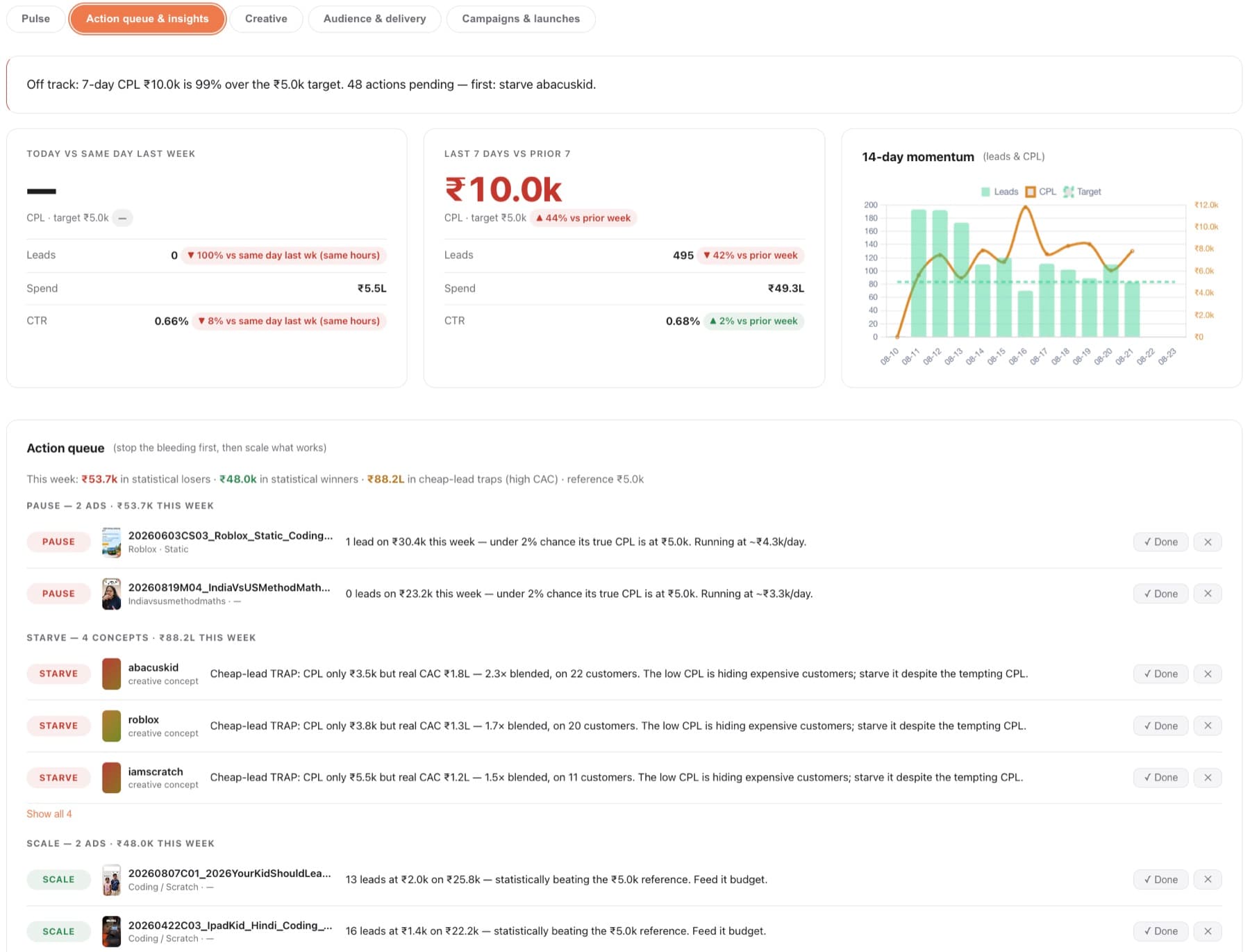
The report ends with a decision.
The system converts the read into a queue the creative and media teams can use together.
A promising creative is not receiving enough delivery to judge fairly.
A concept is holding performance and has room for more budget or variations.
A hook, format, or language gap is clear enough to turn into the next assignment.
AI research + scripting
Research and performance context stay attached to the next script.
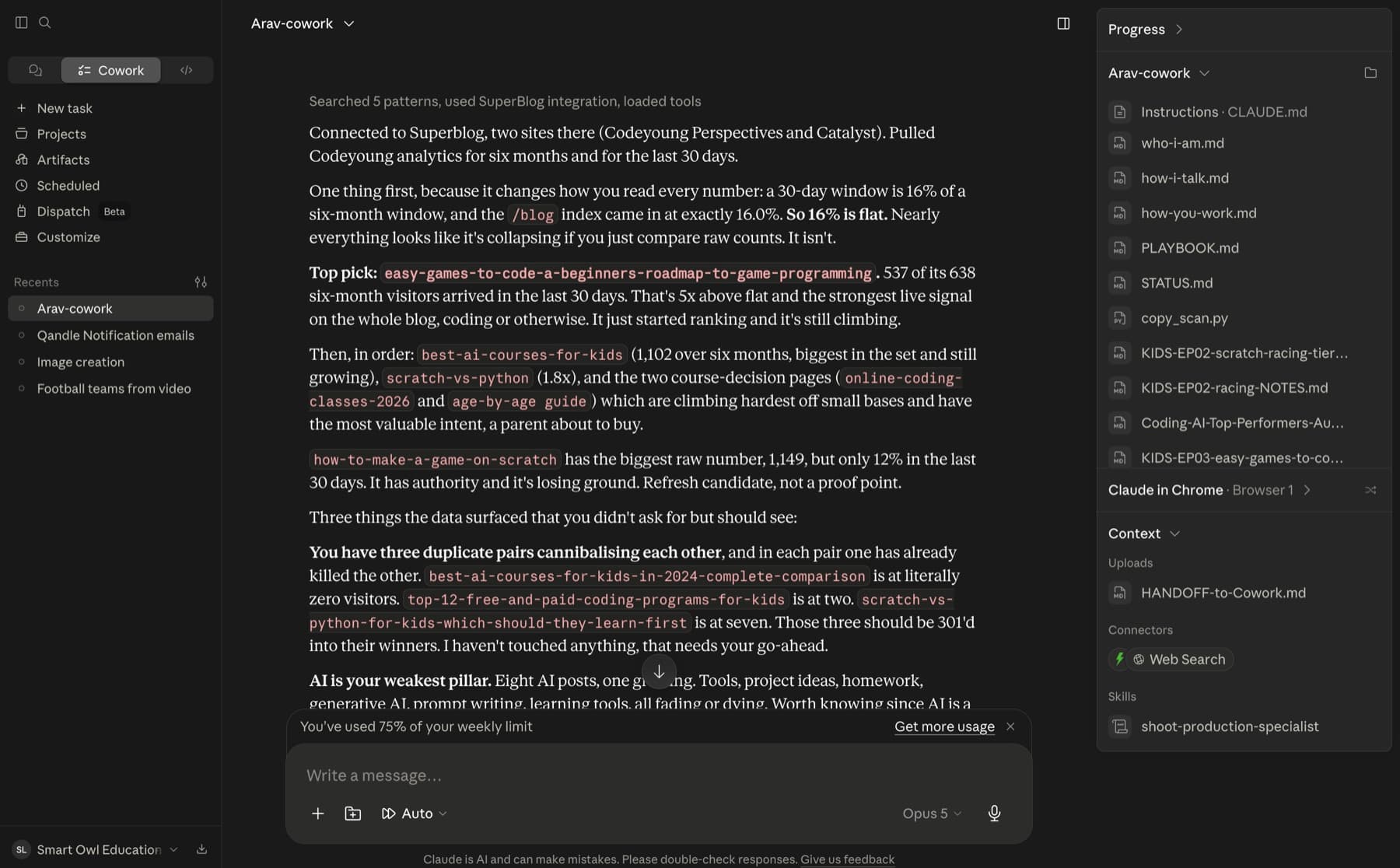
I use AI workspaces to collect audience research, winning patterns, brand rules, prior scripts, and performance notes. A new brief begins with that context, then moves through hook options, English or Tamil scripting, format choice, and production notes.
- 01Research and audience tension
- 02Hook and format options
- 03English or Tamil script
- 04Production brief and variations
What I built